
Kydex Holster Retention: Dialing In That Perfect Click
Kydex holster retention is the friction and mechanical lock that holds your gun in place until you intentionally draw it, and that satisfying “click” comes from a molded indent catching the trigger guard. Dialing it in by hand means heating, pressing, and test-fitting each holster to your specific gun until the lock-up feels right — something a machine-cut, mass-produced holster simply can’t replicate.
Most folks don’t think about kydex holster retention until their gun either falls out or fights them like it’s glued in. Both of those are failures, and both come down to how the retention was built — or wasn’t. That little “click” you hear when your pistol seats home? That’s the whole ballgame. Get it right and you forget the holster’s even there. Get it wrong and you’ve got a daily reminder that you bought cheap.
I’ve molded thousands of holsters by hand, and I can tell you the difference between a holster that clicks right and one that doesn’t almost never comes down to the kydex itself. It comes down to the hands that shaped it. Let me walk you through what retention actually is, why factory holsters botch it, and how we get it dialed on every single piece that leaves the shop.
What Kydex Holster Retention Actually Is (And Why That 'Click' Matters)
Retention is just the holster’s ability to keep your gun where you put it. There are two kinds, and people mix them up all the time. Passive retention uses friction and a molded indent — usually at the trigger guard — to hold the gun. Active retention adds a mechanical device like a thumb release or hood you have to defeat before the draw.
For concealed carry, passive retention is what you want, and that audible click lock is the heart of it. When the molded dimple snaps over the trigger guard, you feel and hear it seat. That trigger guard click tells you the gun is locked in and isn’t going anywhere when you run, bend, or take a tumble. No click, no confidence.
Here’s the part people underestimate: retention isn’t only about keeping the gun in. It’s about a consistent, repeatable draw. A good holster releases the gun at the same resistance every single time, so your draw stroke becomes muscle memory. From what we’ve seen, inconsistent draw resistance is the number one reason carriers lose confidence in a holster they otherwise like.
Think about appendix carry for a second. You’re carrying a loaded pistol pointed at some pretty important anatomy. If your retention is mushy and the gun shifts during the day, that’s not just annoying — it’s a safety problem. The passive retention vs active retention debate gets heated online, but for AIWB the answer is simple: rock-solid passive retention with a clean trigger guard click beats a fiddly active lock you have to think about under stress.
Why Machine-Cut Holsters Get Retention Wrong Every Time
Big manufacturers love to talk about precision. CNC routers, automated presses, tolerances measured in thousandths. Sounds impressive. The problem is that none of that precision is aimed at your gun — it’s aimed at hitting a production quota.
When a factory stamps out holsters by the hundreds, every one gets pressed in the same press, with the same pressure, for the same number of seconds. The mold doesn’t care that your Glock 19 came off the line with a slightly different finish than the one they molded around three years ago. It doesn’t account for wear on the press pad or variation in the kydex sheet thickness from batch to batch. The result is a holster that fits a generic idea of your gun, not your gun.
That’s why so many off-the-shelf holsters rely on the retention adjustment screws as a crutch. The retention point dimpling is shallow or sloppy, so they hand you screws and tell you to “tune it yourself.” You’re cranking down on a holster trying to compensate for a mold that was never right to begin with. A 2023 teardown survey of budget retail holsters that several gun forums circulated found that more than half of sub-$30 kydex rigs had no defined trigger guard indent at all — they were holding the gun on pure clamping friction. That’s the difference between an engineered click and a holster that just squeezes.
I’ve pulled factory holsters apart that had the retention dimple molded in the wrong spot entirely — close to the trigger guard but not actually catching it. Customers came to us frustrated, thinking they needed a better screw setup, when the real issue was the geometry was wrong from the start. No amount of adjusting holster retention with a screwdriver fixes a bad mold.
The Hand-Tuned Difference: How We Dial In Kydex Holster Click By Feel
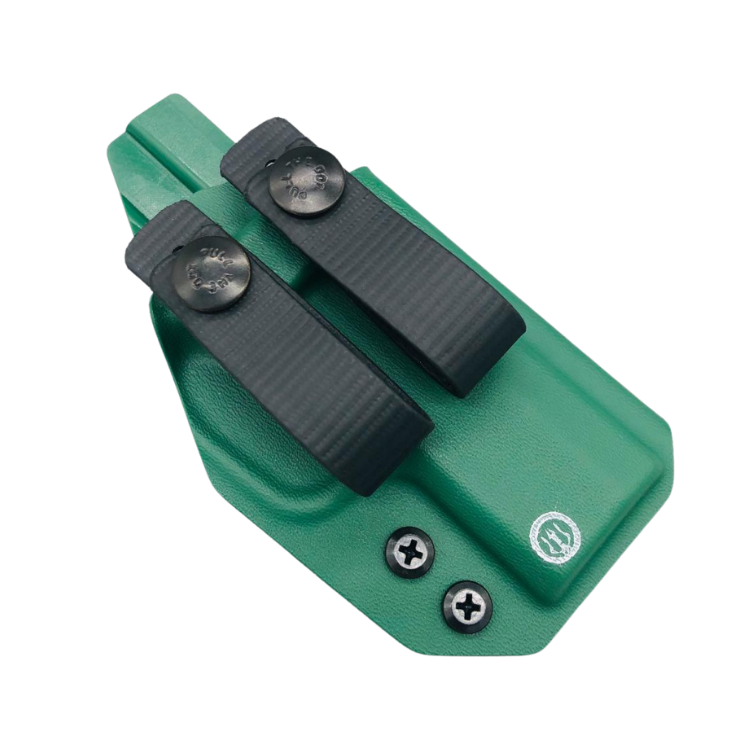
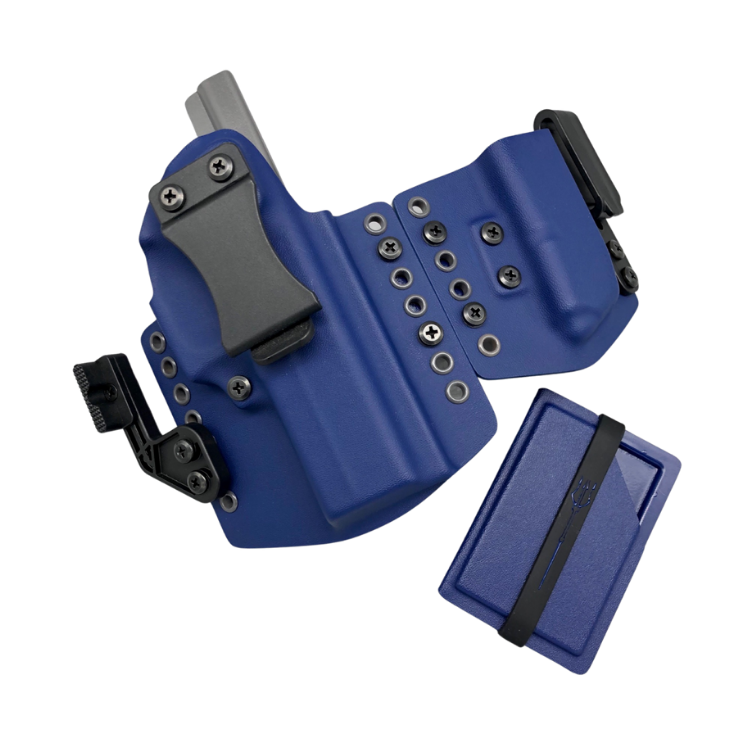
Here’s where the work actually happens. We mold every holster around the specific model it’s built for, by hand, one at a time. That means heating the kydex sheet to the right temperature, pressing it over the gun and our molding fixtures, and then going in by hand to set the retention point exactly where it needs to bite.
Heat gun kydex molding isn’t a button you push. You’re reading the material — watching how it slumps, how it holds heat in the thick spots versus the thin ones. Press too cold and the kydex won’t take a crisp dimple. Press too hot and you wash out the detail and weaken the panel. The sweet spot is narrow, and you only find it by having burned your thumbs on a few hundred holsters first.
The retention point dimpling is the make-or-break step. We work the indent over the trigger guard until the gun seats with a clean, positive click — not a vague drag, not a death grip, but that crisp snap that tells you and your gun are locked together. Then we test-fit with the actual handgun, draw it, reseat it, and do it again. If it doesn’t feel right in the hand, it goes back to the bench.
Every Neptune holster gets test-drawn by hand before it ships — we won’t box a holster that doesn’t click the way we’d want our own carry gun to click.
This is the blood, sweat, and burnt fingers part nobody sees. A machine spits out a holster in seconds. We spend real time on each one because retention you can trust with your life isn’t something you stamp out. If you want to see the lineup we build this way, take a look at our current holster models — every one is shaped to the exact gun it’s made for.
How to Adjust Kydex Holster Retention With the Screws Yourself
Say you’ve got a quality holster and you just want to fine-tune the draw resistance to your taste. Maybe you like a slightly looser pull for competition, or you want it tighter for hiking. The kydex holster retention screws give you that range, and adjusting them yourself is straightforward if you don’t get cute about it.
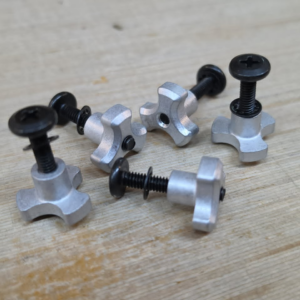
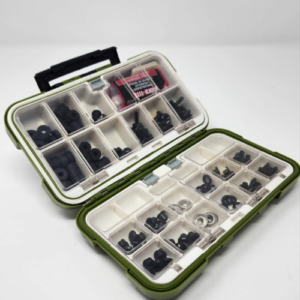
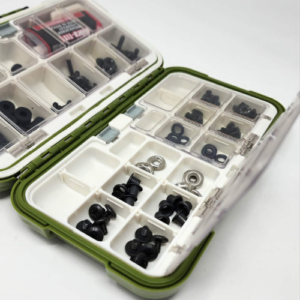
Most retention screws use a Chicago screw or post-and-screw setup with a rubber or neoprene washer that compresses to add tension near the trigger guard. Turning the screw in pinches the kydex tighter against the gun; backing it out loosens the squeeze. Small moves matter here — we’re talking eighth and quarter turns, not cranking it down like a lug nut.
Here’s the process that actually works:
- Unload your gun. Clear it, drop the mag, check the chamber, then check it again. No live ammo anywhere near the bench.
- Find the retention screws. On most holsters they sit near the trigger guard area — that’s the screw doing the real work on your tension.
- Make small adjustments. Use a properly sized hex key or screwdriver. Turn the screw an eighth to a quarter turn at a time.
- Test fit after each turn. Seat the unloaded gun, listen for the click, then test the draw. Tighter for more resistance, looser for less.
- Stop at the click you want. When the draw feels clean and the gun locks home with a confident snap, you’re done.
One thing I’ll tell you straight: screws are for fine-tuning, not for fixing a holster that was molded wrong. If you’re bottoming out the screws and still can’t get a click, the kydex holster tension adjustment isn’t your problem — the mold is. A well-built custom kydex holster should hold retention with the screws at a neutral setting, and the screws just let you nudge it from there.
If you carry appendix, lean toward a touch more retention than you think you need. The angles and movement of AIWB put more stress on the lock-up than strong-side carry does. We get into the why of that in our breakdown of what to look for in an appendix carry holster if you want the full picture.
DIY Retention Mistakes That'll Cost You (And When to Leave It to a Pro)
The internet is full of guys with heat guns and YouTube confidence, and I respect the DIY spirit. But diy kydex holster retention goes sideways fast when people skip the fundamentals. I’ve seen the wreckage, and some of it is genuinely dangerous.
The most common mistake is over-tightening the retention screws to the point where the kydex cracks or the trigger guard area gets deformed. Kydex is tough, but it’s not infinite. Crank a screw down hard enough and you’ll either strip it, crack the panel, or create a pressure point that drags on a specific part of the gun every draw. Once that happens, you’re not adjusting a holster anymore — you’re replacing one.
The dangerous one is heating a holster to re-mold the retention yourself and accidentally collapsing kydex into the trigger guard opening. If anything pushes material into that trigger guard space, you’ve created a holster that can press the trigger as you reholster. That’s how negligent discharges happen. The single rule that matters most: nothing — no kydex, no fabric, no debris — ever belongs inside the trigger guard area of your holster.
Here’s a real example. A customer reached out after trying to “improve” the retention on a holster he’d bought elsewhere. He’d hit it with a heat gun, pressed it down hard by hand, and warped the mouth of the holster so the gun no longer reholstered cleanly without forcing it. He was lucky he caught it before something worse happened. We rebuilt him a proper rig, but the lesson stuck — heat gun kydex molding is a craft, not a weekend experiment with your carry gun.
So when should you stop and call a pro? If you can’t get a clean click with the screws at neutral, if the holster fits multiple guns “okay” but none of them well, or if you’re reaching for the heat gun — that’s your signal. Adjusting holster retention with the screws is fine for fine-tuning. Re-molding geometry is our job, and we’ve got the burned thumbs to prove we know how. If you’re not sure where your situation falls, just reach out and ask us before you do something you can’t undo.
Get a Custom Kydex Holster Built to Click Right Out of the Box
The whole point of buying custom is that you shouldn’t have to fight your holster into submission. When we build a holster around your exact gun — and your light or optic if you run them — the retention is dialed before it ever hits the box. You seat the gun, you hear the click, and you carry. No cranking screws for a week trying to find a setting that holds.
That’s the difference between a holster shaped by hands that carry every day and one stamped out to hit a price point. We obsess over the trigger guard click because we know what’s riding on it. Concealed carry holster fit isn’t a spec sheet — it’s how the thing performs at 5 a.m. when you’re half awake and reholstering by feel, and how it holds your gun when you sprint across a parking lot in the rain.
If you’ve been carrying in something that drags, rattles, or never quite clicks right, you already know the feeling we’re trying to eliminate. Build yourself something better. Take a look at how we do things and what goes into every handmade Neptune holster, and let’s get you a rig that locks home the way it should — the first time, every time.