
Guides
Buy a Kydex Sidecar Holster: Buyer's Guide for Appendix Carry
The sidecar holster has become one of the most popular configurations in the concealed carry community — and for good reason. It solves one of the most persistent challenges in everyday carry: how to keep a spare magazine accessible without adding another piece of gear to your belt. If you’re ready to buy a Kydex sidecar holster and want to make an informed decision, this guide covers everything you need to know.
What Is a Sidecar Holster and Why Do Serious Carriers Choose It?
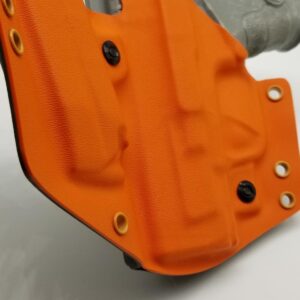
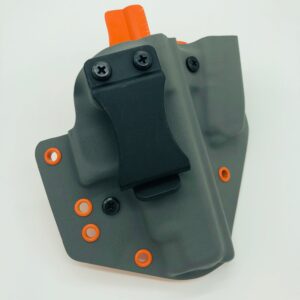
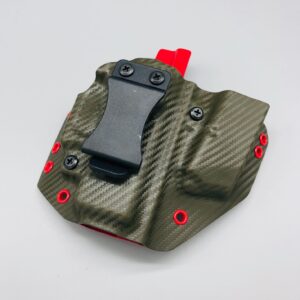
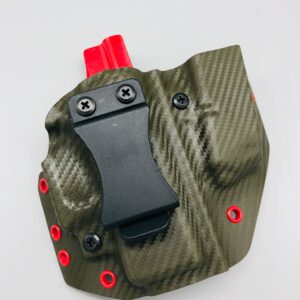
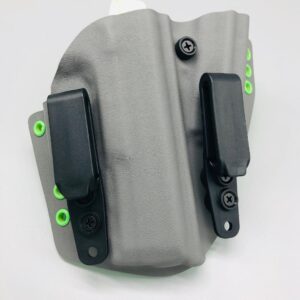
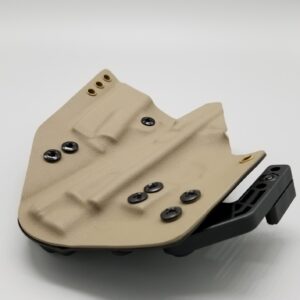
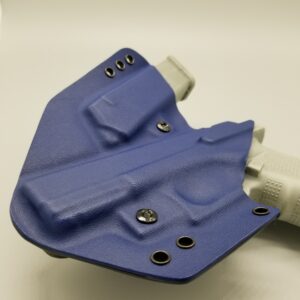
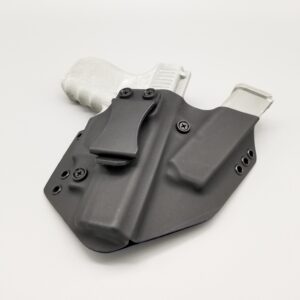
A sidecar holster is an integrated unit that combines a Kydex holster for your firearm with a magazine pouch mounted directly alongside it. The two components are joined on a shared platform and worn together, typically in the appendix inside-the-waistband (AIWB) position — in front of the body, between the hip and the navel.
The name comes from the visual resemblance to a motorcycle sidecar: a primary vehicle with an attached secondary compartment riding alongside it. In holster terms, the “sidecar” is the magazine pouch, positioned just beside the holster body.
What makes this configuration compelling for serious carriers is the consistency it creates. Your firearm and your spare magazine are always in the same place, at the same angle, at the same height. This consistency is not a luxury — it is a fundamental principle of defensive carry. In a high-stress situation, your hands need to go to exactly where they expect the gear to be. A sidecar holster eliminates the variable of where your magazine is positioned relative to your firearm.
The Case for Appendix Carry
Appendix carry is the preferred method for a significant portion of experienced concealed carriers, and the sidecar holster is designed specifically to complement it. Carrying in the appendix position offers several practical advantages.
First, it keeps your firearm in front of your body, where it is more easily protected and more difficult for an attacker to access from behind. Second, it allows for a natural and fast draw stroke — your hand moves directly to the grip without reaching behind the hip. Third, when properly set up, appendix carry can be more concealable than strong-side carry for many body types, because the firearm sits in a narrower part of the body’s profile.
The sidecar configuration enhances these advantages by keeping the magazine pouch in the same front-of-body position. A single well-designed unit replaces what would otherwise require a holster at the appendix position and a separate magazine carrier somewhere else on the belt.
What to Look for When You Buy a Kydex Sidecar Holster
Sidecar holsters vary considerably in quality, design, and suitability for daily carry. The following criteria will help you evaluate your options before purchasing:
Platform Rigidity
The connection between the holster body and the magazine pouch must be rigid. If the two components can flex or shift relative to each other, the holster will not maintain a consistent position on your body, and the draw and reload will feel different each time. Look for a single-piece or firmly joined platform with no flex between the components.
Kydex Thickness and Quality
Not all Kydex is the same. Thicker Kydex provides more rigidity and durability, while thinner Kydex reduces bulk. For a sidecar holster that will be worn daily, a balance of rigidity and comfort is important. The quality of the forming process — how tightly the Kydex is molded to the firearm — determines how well the holster retains the gun and how smoothly it draws.
Concealment Features
A well-designed sidecar holster should include a concealment claw or wing that presses the grip of the firearm inward as the belt applies pressure. This is especially important in the appendix position, where the grip of the firearm is most visible under clothing.
Clip Configuration
Most sidecar holsters use two clips — one on the holster side and one on the magazine pouch side — to distribute weight and prevent the unit from tilting. The clip type matters: anodized metal clips or quality polymer options like Grip Hooks and Fomi clips offer different ride characteristics. Neptune Concealment’s Hades Sidecar IWB Holster gives you the choice of two Grip Hooks or one Fomi clip, with an optional upgrade to Ulticlip 3+ hardware for those who want a clipless carry option.
Compatibility with Your Firearm
The Hades Sidecar IWB Holster: Built for Daily Carry
Neptune Concealment is a veteran-owned and operated company based in middle Tennessee. Every holster is handmade to order, which means your holster is not pulled from a shelf — it is built specifically for your firearm model, your preferred hand, your chosen color or print, and your clip configuration.
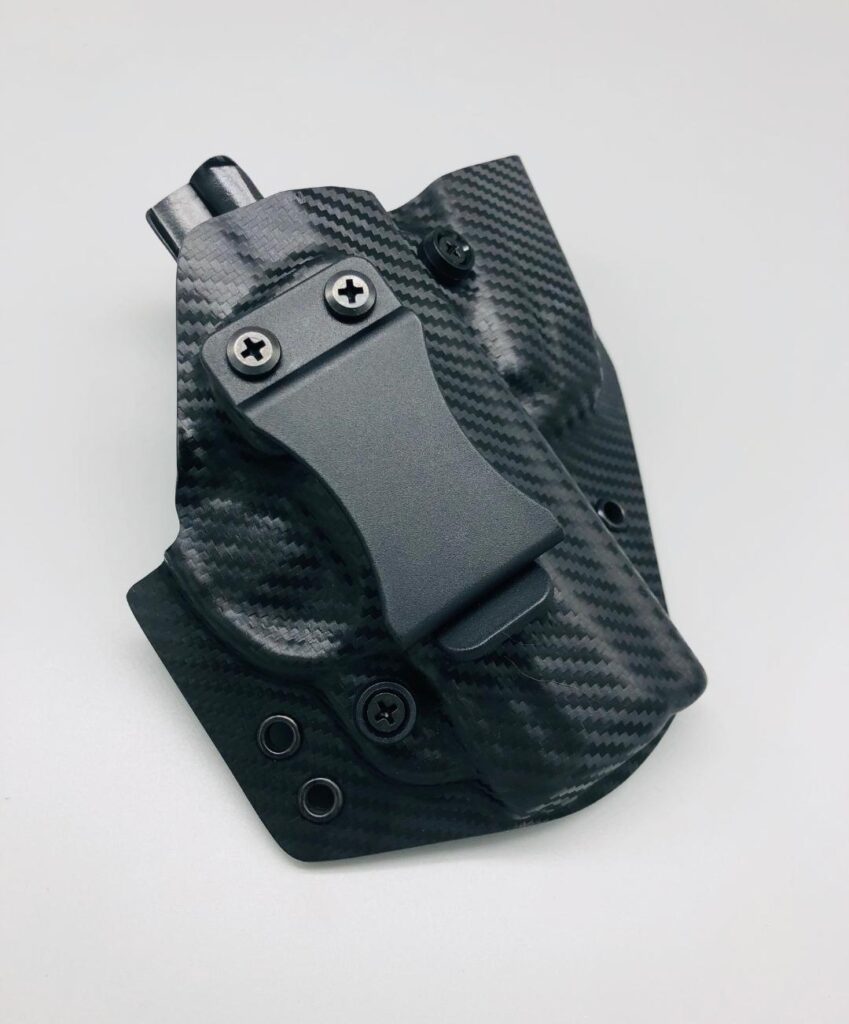
Neptune Concealment’s Hades Sidecar IWB Holster is a handmade, veteran-built sidecar system designed for concealed carriers who want a reliable, all-in-one carry solution. At $90, it represents a significant step up from a standalone holster — and delivers a corresponding step up in capability.
The Hades is built from durable Kydex and is available in a range of colors and custom print options. It is designed for appendix inside-the-waistband carry and ships with your choice of clip configuration. The integrated magazine pouch keeps your spare magazine in a consistent, accessible position alongside your firearm, eliminating the need for a separate carrier.
The holster is custom-molded to your specific firearm model, ensuring a precise fit and reliable retention. Like all Neptune Concealment products, it is handmade in the USA with a 2-week lead time — a reflection of the care that goes into each build.
For carriers who want to add Ulticlip 3+ hardware for a clipless carry option, that upgrade is available at checkout for an additional $25.
Sidecar vs. Standalone IWB Holster: Which Is Right for You?
| Consideration | Standalone IWB Holster | Kydex Sidecar Holster |
|---|---|---|
| Spare magazine carry | Requires separate mag carrier | Integrated into the holster unit |
| Belt footprint | Single clip point | Two clip points, wider platform |
| Reload consistency | Depends on mag carrier placement | Fixed, consistent position every time |
| Concealment | Slim profile | Slightly wider, but unified unit |
| Best carry position | Strong-side, appendix, or 4 o'clock | Primarily appendix carry |
| Ideal user | Minimalist carrier, new to IWB carry | Experienced carrier, self-defense focused |
The sidecar configuration is not the right choice for every carrier. If you prefer strong-side or 4 o’clock carry, or if you rarely carry a spare magazine, a standalone IWB holster like the Triton Premium may be a better fit. But if you carry appendix and want your reload built into your carry system, the sidecar is hard to beat.
Final Thoughts
The price difference between a $30 mass-produced holster and a $75 custom handmade one is not arbitrary. It reflects the cost of precision molding, quality hardware, skilled labor, and the time required to build something that will actually perform. When you carry a firearm for self-defense, the holster is not the place to cut corners.
FAQ
Frequently Asked Questions for Kydex
Is appendix carry with a sidecar holster safe for everyday use?
Yes, appendix carry with a quality Kydex sidecar holster is safe when the holster fully covers the trigger guard and the carrier follows proper draw and reholstering discipline. The key safety requirement is that the trigger is never exposed while the firearm is in the holster. A well-molded Kydex holster provides a rigid trigger guard cover that does not collapse or deform, which is why Kydex is the preferred material for AIWB carry.
How long does it take to get comfortable with a sidecar holster?
Most carriers need one to two weeks of daily wear to fully adapt to a sidecar holster. The wider platform and forward weight distribution feel different from a standalone holster, particularly when sitting. Starting with short wear periods and gradually increasing throughout the day is a practical approach. Adjusting the ride height and cant can also make a significant difference in comfort.
Can I use the Hades Sidecar Holster with a weapon light on my firearm?
No. Due to the shape and size of the Hades sidecar platform, it does not support weapon lights, red dot optics, or RMR-style optics. If you run a light-bearing setup, Neptune Concealment's Titan Series sidecar holster is the appropriate option and supports those configurations.
What is the difference between Grip Hooks and a Fomi clip for a sidecar holster?
Grip Hooks are small, curved clips that hook over the waistband without attaching to the belt. They offer a low-profile carry option that works well with athletic wear or pants without a belt. A Fomi clip is a traditional over-the-belt clip that attaches to the belt itself, providing more stability and retention. The right choice depends on your typical clothing and how much stability you prefer.
Is a sidecar holster comfortable for people who sit for long periods?
Comfort while seated is one of the most common concerns with appendix carry in general. A well-designed sidecar holster with adjustable ride height can be positioned to minimize discomfort when seated. Many carriers find that a slight forward cant and a lower ride height improve comfort significantly. It is worth experimenting with the adjustment options before concluding that appendix carry is not compatible with your lifestyle.